I became a Final Fantasy fan in 1997 with Final Fantasy VII, and have played every (non-MMO) game in the series since. I only just now went back to the game in the series most likely to give FFVII a run for its money as best Final Fantasy ever
Revisiting Final Fantasy VI Advance
The Table of Contents
Final Fantasy VI (originally released in 1994 for the SNES as Final Fantasy III). I was skeptical that an SNES-era game could be as compelling as the technologically and narratively groundbreaking FFVII, but despite a somewhat slow first half, FFVI is well worth playing even 20 years after its original release.
Story and Characters
The core of the Final Fantasy RPG experience is definitely here – you assemble a team of adventurers to save the world from an overpowered menace. You visit towns, traverse a world map, meet a guy named Cid (one of the better Cids in the series), get an airship, and (even more so in the Game Boy Advance port) explore side quests and optional bosses to your heart’s content.
Ensemble Cast and Villain
But a big part of what makes FFVI one of the best Final Fantasy games ever is the way you get to know this particular team of adventurers. Most other FF games have one clearly central protagonist, or at least a character around whom the story is mainly focused (Cloud, Squall, Zidane, Tidus, etc.). In FFVI, though, the focus is more evenly spread across the ensemble. The story focuses more on some characters (Terra, Locke, Celes) than others (Gau, Mog, Gogo), but it does not feel like one person’s story; rather, it is that of a group of people with their own stories and connections to the overall plot.
Kefka, one of the game’s villains, is also one of the best villains in all of FF – fascinatingly, repulsively sadistic and nihilistic.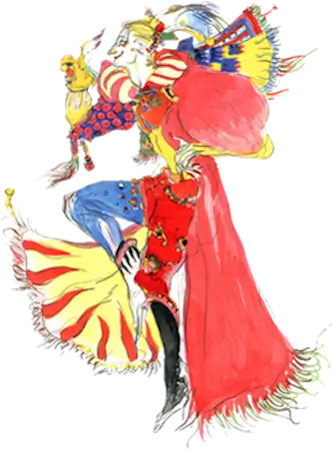
Major Plot Twist and Narrative Strengths
There’s a major plot twist about 2/3 of the way through FFVI. I won’t spoil it here, but if you want to be surprised – and it’s a really worthwhile surprise – you should avoid virtually everything else written on the internet about FFVI, because unannounced spoilers abound.
The plot twist upends the normal conventions of RPG stories and reinvigorates the game experience just as it might have been getting stale. With many RPGs, I feel like by the last third of the game, I’m kind of tired of the experience, but have to keep grinding to reach the payoff of the story’s ending and the gameplay’s final boss battles. The last third of FFVI is by far the best part of the game, which is, in my mind, a major accomplishment.
Character Arcs and Side Quests
One highlight is that you can spend time pursuing side quests and exploring the characters’ individual challenges, both past and present. Many of the characters’ stories were genuinely moving in one way or another, and their emotional terrain was often far from simple in ways I can’t remember experiencing to a similar degree in any other game from the SNES era. As i was reminded of my gameplay of final fantasy IV adavance which I just reviewed here as well.
Gameplay Overview
The gameplay of FFVI will be familiar to fans of the series: turn-based battles encountered randomly from dungeons and the world map, towns full of NPCs and stores, Chocobo mounts, and airships.
Challenge and Party Mechanics
I was a little disappointed by the battle mechanics in the first half – it felt too easy to win by mindlessly employing a few overpowered attacks (Edgar and Sabin’s special moves alongside Terra and Celes’s magic).
After the plot twist, battles got more challenging, though, and the introduction of the new mechanic of multiple dungeon parties made things even more interesting. It’s worth noting that most characters’ levels seem to be auto-raised after the plot twist, so if you’re a bit bored in the first half, like I was, you can just speed through it without worrying about being terribly under-leveled in the second half.
Some optional dungeons in the last third require that you take two parties into a dungeon, requiring you to work with 6-8 characters instead of the standard 3-4. This forced me to use characters I’d been neglecting, and to cover for this, I split my good characters between the two parties, which meant that each party was weaker and in more danger in its battles.
Endgame and Replay Value
This system is taken even further in the final dungeon, where you have to use three parties to reach the final boss, at which point yet another new battle mechanic – running through a ranked list of your characters as you fight through several tiers of pre-bosses – makes the final confrontation a new kind of challenge.
All in all, the first two-thirds of the game were fine but nothing special, while the last third of the game makes FFVI a classic RPG experience in story and gameplay. The way the story concludes after the final battle adds a nice capstone to all the good work that has gone before (and while there’s no New Game Plus, the Advance version of FFVI does have new challenge dungeons and bosses that become available after the main game has been beaten).
Final Thoughts and Score
It’s a testament to the quality of the story and gameplay that I haven’t even had time to mention the soundtrack until now. It’s one of Nobue Uematsu’s best – this is definitely a portable game that you should pop in the headphones for.
When I started Final Fantasy VI Advance, I was skeptical that an SNES-era game could rival FFVII in any way, but the game's last third makes it a strong contender.
We rate: Final Fantasy VI Advance an 8.8/10 — a ★★★★☆ on our retro RPG scale.
The Collector’s Perspective:
Final Fantasy games are often counterfeited today. It is vital to know this because they are still very playable. From a resale value perspective, the original packaging makes a dramatic difference.
If you still have the original box and manual for the GBA version, you can expect 118% more than a loose cartridge. The SNES version of Final Fantasy III, known as Final Fantasy VI, has a high price tag. A complete copy with the box, manual, and inserts sells for 309% more than the loose cartridge. The original Super Nintendo version is worth much more than the Game Boy Advance remake. If you wanna trade in any of your old Super Nintendo Games or Game Boy Advance games, we buy both libraries for very reasonable prices.